


Get On The List
Get the latest Men's Style Advice, Evergreen Guides, Shopping Tips, and Exclusive Deals From Today's Top Brands.

 13 August 2015
 Michael Dale
We independently evaluate all recommended products and services. Any products or services put forward appear in no particular order. if you click on links we provide, we may receive compensation.
The simple handkerchief is – by most accounts – at least a few centuries older than the modern suit. In fact, it dates as far back as Shakespearean times (those of you who weren’t sleeping through English Lit. will remember it being an integral plot device in Othello), with many claiming this humble accessory has its roots in the square-shaped cloths carried by Richard II’s courtiers for the purely practical purpose of nose-blowing.
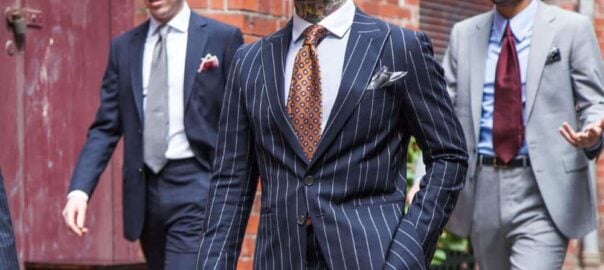
Since then, the pocket square has become a sartorial staple for the modern man, proudly presented in the breast pockets of Hollywood stars and Presidents alike. Whether cotton, linen or silk, plain, patterned or printed, one of these square pieces of cloth has the potential to pull an average tailored look into the A-grade.
So, how to reach pocket square perfection? Here are a few simple rules for nailing this subtle sartorial detail:
“One of the big pocket square no-nos for me is when they directly match the tie, like they came together in a set,” says Dan Rookwood, US Editor at Mr Porter. “A pocket square should be used to add some interest in terms of color and/or pattern.”
With this in mind, start by considering the rest of your outfit and then coordinate your accessories accordingly, without matching exactly. For example, a hint of burgundy in your pocket square’s print or pattern will team well with a burgundy tie.

While the possible combinations are endless, it’s worth starting off by stocking up on some of the essentials to ensure that you’ll always have something outfit-appropriate to hand.
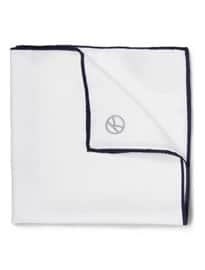
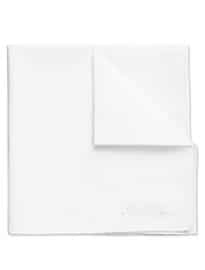
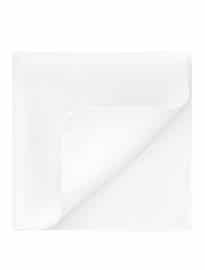
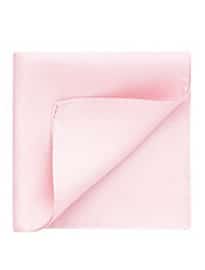
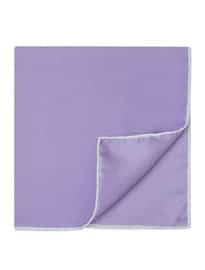
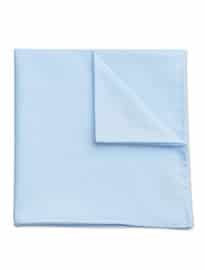
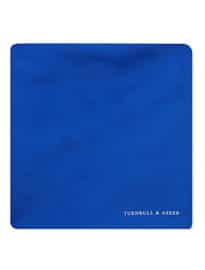
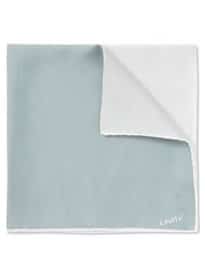
Plain color styles are an absolute must, their simplicity and lack of pattern making them easy to match with your ensemble. Especially worthwhile investing in when taking your first steps into pocket squares is a classic white version – now widely considered as much a wardrobe essential as the Oxford shirt or Derby shoe.
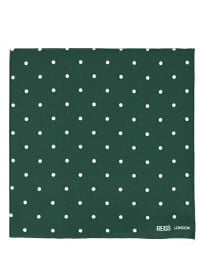
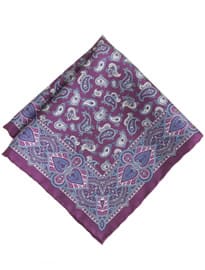
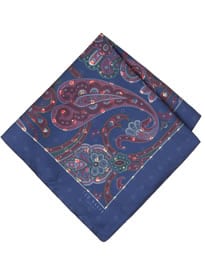
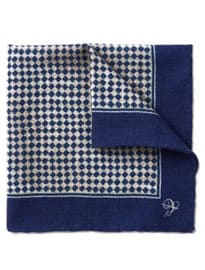
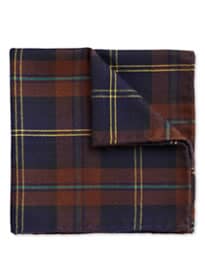
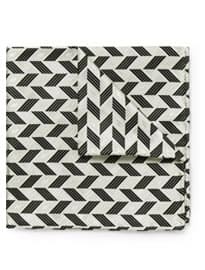
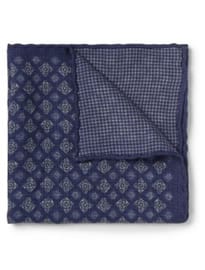
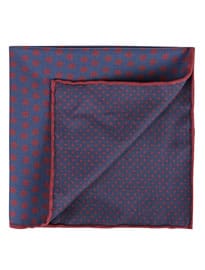
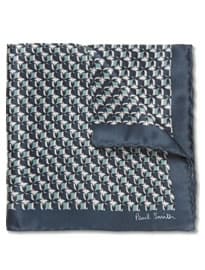
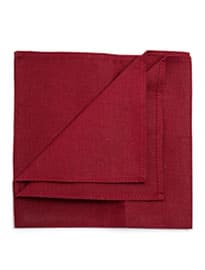
Once you’ve got your plain color bases covered, it’s time to introduce pattern. Prioritize timeless motifs – think paisley, polka dots and checks – in rich jewel tones like burgundy, navy, and bottle green, as well as fail-safe neutrals like white, grey and black.
RELATED: 7 BEST POCKET SQUARE HOLDERS TO PAIR WITH SUITS
As pocket squares tend to be handled, tweaked and tugged a lot throughout the day, they can very quickly become a bit grubby. Intended as a pristine finishing touch to a smart ensemble, a pocket square should always be perfectly clean.
A dirty patterned one will look dull and lacklustre. A dirty white one will look, well, plain dirty. So, be sure to wash yours (according to manufacturer’s instructions) if they’re not looking their best.
Although a carefully hand-rolled edge usually denotes a higher price tag, it also denotes a much finer piece of craftsmanship.
Unlike machine-sewn edges, which tend to look flat and often feature an abundance of exposed, loose thread, hand-rolled edges are carefully rolled and stitched by hand to produce a unique finish.
If you really must – taking a leaf out of your eighty-year-old grandmother’s book – blow your nose on a handkerchief, then don’t use the one in your pocket. Keep a spare handkerchief in your hip pocket ready for such eventualities. Right next to your boiled sweets.
Before beginning to assemble a wardrobe of killer hankies, it’s imperative to observe the art of the fold. “Pocket squares can look a little bit fussy if they are over-styled, looking like ornate pieces of silken origami,” says Rookwood.
So how best to navigate this sartorial minefield? Stick to the time-honored folds below and you can’t go far wrong:
The square fold, sometimes known as The Presidential, is probably the most easily executed and versatile fold. Just as effective with a formal tuxedo jacket and bow tie as it is with a blazer and knitted neck tie, it’s perfect if you’re finding your feet with folds.
According to Rookwood, opt for cotton to get that super sharp red carpet-ready finish: “Cotton pocket squares offer a crisp edge when pressed [allowing you] to create that squared off straight line like Mad Men’s Don Draper.”
Color-wise, a white pocket square is a classic that every man should have in his collection and it lends itself well to this fold, but a light blue or flecked style both fit the bill too. If you’re strapped for cash, head to the high street for affordable options, or try T.M.Lewin, which offers a good balance between price and quality.
 Image: Charles Tyrwhitt 2015
Not much more taxing than a square fold, but definitely more eye-catching. The one-point fold is versatile enough to be worn for work or play; just base your choice of fabric on the skew of your look.
For something a little more buttoned up (i.e. a classic business or formal outfit), try a crisp cotton style – preferably in white or light blue – to achieve a sharp triangular shape. For something a little less reserved, plump for a silk pocket square – in a bold hue like orange, red, or whatever colour best complements that suit you’re wearing – folded into a looser one-point.
If you do end up going for silk, then make sure your square is made from top-grade fibres. Turnbull & Asser tend to cater to dandyish leanings and have a luxurious offering but Savile Row brand Drake’s is also worth a look for quality that falls within a more affordable price bracket.
 Image: Austin Reed SS14
Consider this your right of passage as a budding pocket square aficionado. The two-point is a more complex fold that you’ll probably need to practice before you get it right.
Well suited to silk squares, the two-point’s statement-making structure allows you to play a little faster and looser with your choice of colour and pattern – a bold check complements this fold’s angular lines particularly well.
Duchamp and Thomas Pink are particularly established when it comes to larger checks and plaids, while Reiss is worth stopping by for a slightly cheaper, more subtly patterned options. Ideally, you’d wear this attention-grabbing fold in the chest pocket of a blazer, but there’s also the option of tearing up the rulebook and slipping a bright pop of colour or a punchy polka dot into a dinner jacket.
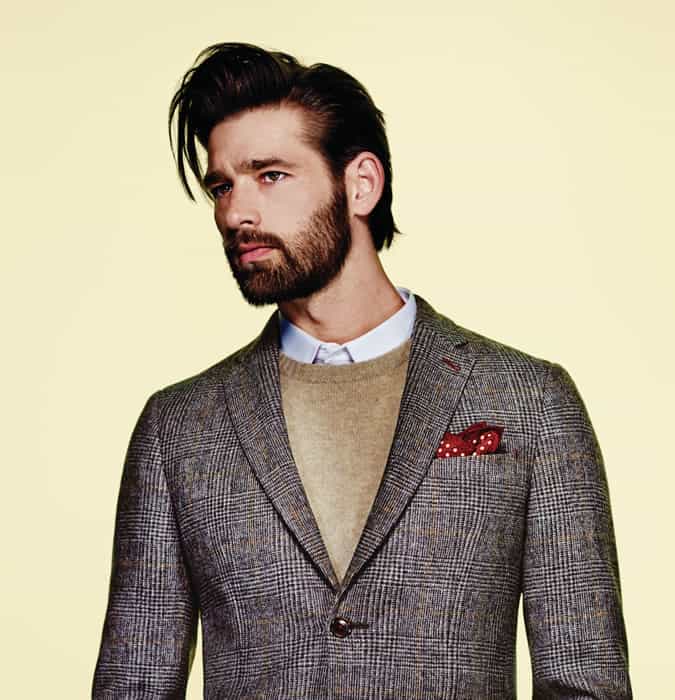 Image: Burton AW15
Mastered the two-point fold? Ready to take your pocket square proficiency to the next level? Then look no further: the three-point fold, or ‘Crown Fold’ as it’s sometimes known, is a bona fide showstopper.
As the folds are smaller with a three-point, you’ll want to reflect this in your choice of motif, so perhaps opt for a gingham check from the likes of J.Crew or Charles Tyrwhitt so your pattern’s impact isn’t lost.
Alternatively, take a leaf from Frank Sinatra’s book and try a bold plain colour style in silk teamed with a dinner jacket – rakish sophistication at its finest.
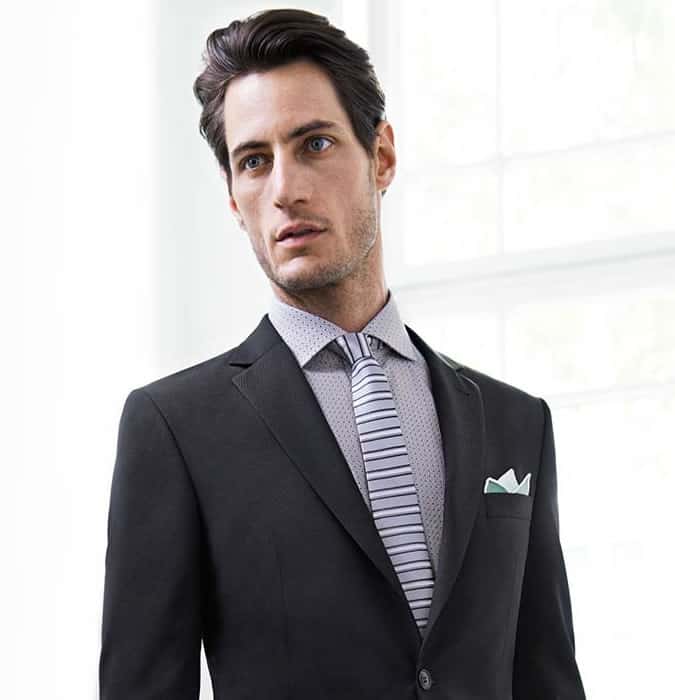 Image: Digel SS15
While this is probably the simplest of all the folds, it’s certainly not to be sniffed at. Boasting plenty of body, the casual, or ‘puff’ fold, is the prime option for playing with pattern as it displays the most fabric surface area.
Silk – rather than cotton – is the ideal choice for achieving the level of volume you require with this one, and feel free to go big with your pattern choice too, whether it’s paisley, a sizeable check or polka dot that takes your fancy. The likes of Rubinacci, Etro and Richard James offer some superb statement options at the luxury end of the market, while those shopping on a more modest budget should try Scotch & Soda.
Remember that this is a strong look and so is best suited to smart separates rather than a business suit.

The video below visual demonstrates how to fold a pocket square in the five ways we’ve outlined above, plus another thrown in for good measure.
Hopefully these tips and tricks will help you on your journey to pocket perfection. And don’t forget that while the whys and wherefores of wearing pocket squares are good to know, sometimes rules are meant to be broken. So why not push the boundaries a little?
Have you tried out combos that contradict traditional guidelines and pulled it off with panache? Or do you always advise playing it safe with pocket squares?
Let us know by commenting below.

 13 August 2015
 Michael Dale
We independently evaluate all recommended products and services. Any products or services put forward appear in no particular order. if you click on links we provide, we may receive compensation.
The simple handkerchief is – by most accounts – at least a few centuries older than the modern suit. In fact, it dates as far back as Shakespearean times (those of you who weren’t sleeping through English Lit. will remember it being an integral plot device in Othello), with many claiming this humble accessory has its roots in the square-shaped cloths carried by Richard II’s courtiers for the purely practical purpose of nose-blowing.
Since then, the pocket square has become a sartorial staple for the modern man, proudly presented in the breast pockets of Hollywood stars and Presidents alike. Whether cotton, linen or silk, plain, patterned or printed, one of these square pieces of cloth has the potential to pull an average tailored look into the A-grade.
So, how to reach pocket square perfection? Here are a few simple rules for nailing this subtle sartorial detail:
“One of the big pocket square no-nos for me is when they directly match the tie, like they came together in a set,” says Dan Rookwood, US Editor at Mr Porter. “A pocket square should be used to add some interest in terms of color and/or pattern.”
With this in mind, start by considering the rest of your outfit and then coordinate your accessories accordingly, without matching exactly. For example, a hint of burgundy in your pocket square’s print or pattern will team well with a burgundy tie.
While the possible combinations are endless, it’s worth starting off by stocking up on some of the essentials to ensure that you’ll always have something outfit-appropriate to hand.
Plain color styles are an absolute must, their simplicity and lack of pattern making them easy to match with your ensemble. Especially worthwhile investing in when taking your first steps into pocket squares is a classic white version – now widely considered as much a wardrobe essential as the Oxford shirt or Derby shoe.
Once you’ve got your plain color bases covered, it’s time to introduce pattern. Prioritize timeless motifs – think paisley, polka dots and checks – in rich jewel tones like burgundy, navy, and bottle green, as well as fail-safe neutrals like white, grey and black.
RELATED: 7 BEST POCKET SQUARE HOLDERS TO PAIR WITH SUITS
As pocket squares tend to be handled, tweaked and tugged a lot throughout the day, they can very quickly become a bit grubby. Intended as a pristine finishing touch to a smart ensemble, a pocket square should always be perfectly clean.
A dirty patterned one will look dull and lacklustre. A dirty white one will look, well, plain dirty. So, be sure to wash yours (according to manufacturer’s instructions) if they’re not looking their best.
Although a carefully hand-rolled edge usually denotes a higher price tag, it also denotes a much finer piece of craftsmanship.
Unlike machine-sewn edges, which tend to look flat and often feature an abundance of exposed, loose thread, hand-rolled edges are carefully rolled and stitched by hand to produce a unique finish.
If you really must – taking a leaf out of your eighty-year-old grandmother’s book – blow your nose on a handkerchief, then don’t use the one in your pocket. Keep a spare handkerchief in your hip pocket ready for such eventualities. Right next to your boiled sweets.
Before beginning to assemble a wardrobe of killer hankies, it’s imperative to observe the art of the fold. “Pocket squares can look a little bit fussy if they are over-styled, looking like ornate pieces of silken origami,” says Rookwood.
So how best to navigate this sartorial minefield? Stick to the time-honored folds below and you can’t go far wrong:
The square fold, sometimes known as The Presidential, is probably the most easily executed and versatile fold. Just as effective with a formal tuxedo jacket and bow tie as it is with a blazer and knitted neck tie, it’s perfect if you’re finding your feet with folds.
According to Rookwood, opt for cotton to get that super sharp red carpet-ready finish: “Cotton pocket squares offer a crisp edge when pressed [allowing you] to create that squared off straight line like Mad Men’s Don Draper.”
Color-wise, a white pocket square is a classic that every man should have in his collection and it lends itself well to this fold, but a light blue or flecked style both fit the bill too. If you’re strapped for cash, head to the high street for affordable options, or try T.M.Lewin, which offers a good balance between price and quality.
Image: Charles Tyrwhitt 2015
Not much more taxing than a square fold, but definitely more eye-catching. The one-point fold is versatile enough to be worn for work or play; just base your choice of fabric on the skew of your look.
For something a little more buttoned up (i.e. a classic business or formal outfit), try a crisp cotton style – preferably in white or light blue – to achieve a sharp triangular shape. For something a little less reserved, plump for a silk pocket square – in a bold hue like orange, red, or whatever colour best complements that suit you’re wearing – folded into a looser one-point.
If you do end up going for silk, then make sure your square is made from top-grade fibres. Turnbull & Asser tend to cater to dandyish leanings and have a luxurious offering but Savile Row brand Drake’s is also worth a look for quality that falls within a more affordable price bracket.
Image: Austin Reed SS14
Consider this your right of passage as a budding pocket square aficionado. The two-point is a more complex fold that you’ll probably need to practice before you get it right.
Well suited to silk squares, the two-point’s statement-making structure allows you to play a little faster and looser with your choice of colour and pattern – a bold check complements this fold’s angular lines particularly well.
Duchamp and Thomas Pink are particularly established when it comes to larger checks and plaids, while Reiss is worth stopping by for a slightly cheaper, more subtly patterned options. Ideally, you’d wear this attention-grabbing fold in the chest pocket of a blazer, but there’s also the option of tearing up the rulebook and slipping a bright pop of colour or a punchy polka dot into a dinner jacket.
Image: Burton AW15
Mastered the two-point fold? Ready to take your pocket square proficiency to the next level? Then look no further: the three-point fold, or ‘Crown Fold’ as it’s sometimes known, is a bona fide showstopper.
As the folds are smaller with a three-point, you’ll want to reflect this in your choice of motif, so perhaps opt for a gingham check from the likes of J.Crew or Charles Tyrwhitt so your pattern’s impact isn’t lost.
Alternatively, take a leaf from Frank Sinatra’s book and try a bold plain colour style in silk teamed with a dinner jacket – rakish sophistication at its finest.
Image: Digel SS15
While this is probably the simplest of all the folds, it’s certainly not to be sniffed at. Boasting plenty of body, the casual, or ‘puff’ fold, is the prime option for playing with pattern as it displays the most fabric surface area.
Silk – rather than cotton – is the ideal choice for achieving the level of volume you require with this one, and feel free to go big with your pattern choice too, whether it’s paisley, a sizeable check or polka dot that takes your fancy. The likes of Rubinacci, Etro and Richard James offer some superb statement options at the luxury end of the market, while those shopping on a more modest budget should try Scotch & Soda.
Remember that this is a strong look and so is best suited to smart separates rather than a business suit.
The video below visual demonstrates how to fold a pocket square in the five ways we’ve outlined above, plus another thrown in for good measure.
Hopefully these tips and tricks will help you on your journey to pocket perfection. And don’t forget that while the whys and wherefores of wearing pocket squares are good to know, sometimes rules are meant to be broken. So why not push the boundaries a little?
Have you tried out combos that contradict traditional guidelines and pulled it off with panache? Or do you always advise playing it safe with pocket squares?
Let us know by commenting below.


Get the latest Men's Style Advice, Evergreen Guides, Shopping Tips, and Exclusive Deals From Today's Top Brands.
We respect your privacy. We won't spam you.
Get the latest Men's Style Advice, Evergreen Guides, Shopping Tips, and Exclusive Deals From Today's Top Brands.
We respect your privacy. We won't spam you.
