


Get On The List
Get the latest Men's Style Advice, Evergreen Guides, Shopping Tips, and Exclusive Deals From Today's Top Brands.

 07 September 2021
 FashionBeans Editors
We independently evaluate all recommended products and services. Any products or services put forward appear in no particular order. if you click on links we provide, we may receive compensation.
Whether you’re an avid lifter wanting to show off your hard-won pecs, a cyclist who wants to maintain a pair of aerodynamic pins, or you simply hate having hairy shoulders, chances are you’ll have dabbled in body hair removal at some point.
If you have, you’re not alone. In fact, according to a survey by Braun, 62 per cent of men now manscape regularly, with those that do saying it makes them feel cleaner, sexier and also enhances the appearance of their muscles.
What’s more, a third of blokes also reckon it makes them more popular with the opposite sex. The question is: do you wax, shave or laser? Undecided? Here are the pros and cons of some of the most popular body hair removal methods, along with a few tips to ensure you’re successful in getting the smoothest results possible.
The main advantage of waxing is its long-lasting results. Take to ripping the hairs out and you’ll be fuzz-free for up to six weeks. And since the hair is removed at the root, it’ll grow back with fine, rather than blunt, ends so it’s less likely to itch.
Though best performed by a professional, if feeling brave there are now plenty of options on the market that will allow you to wax from the (dis)comfort of your own home, too.
Familiar with the expression ‘no pain, no gain’? It may as well have been invented for waxing. There are worse pains (getting kicked in the balls or your football team being relegated, for example) but make no mistake: this is still equally eye-watering stuff.
The pain is fleeting, mind, and it is possible to get used to it after a while. Sort of.

The simplest of all the hair removal methods, all that’s needed is a razor, some shaving cream and a steady hand.
The reason shaving is one of the most popular choices is that it doesn’t require a great deal of skill. Essentially, if you can shave your chin, you can shave your chest, too.
The odd nick and cut aside (bear in mind you’ll have to navigate nipples), the biggest drawback of shaving is itchy regrowth and the risk of developing unsightly and painful ingrown hairs.
Because you’ll be slicing the hairs off at the surface of the skin, within days you’ll also be left with chest, stomach or shoulder stubble.
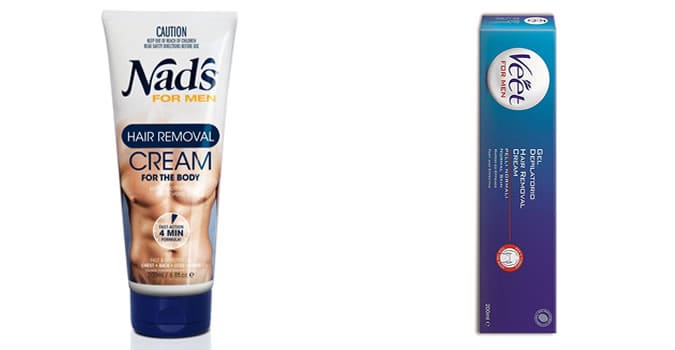
The beauty of depilatory or ‘hair removal’ creams like Veet For Men Hair Removal Cream, Nad’s For Men and Nair Men is that they’re so easy to use. Simply apply, leave for a few minutes and then wash off – along with the unwanted hair, which is weakened at root level by the chemicals in the cream and falls away.
They’re particularly useful for areas like the shoulders that can be hard to reach with a razor. They’re also good for chests, armpits and legs, too.
The results aren’t as long-lasting as with waxing (hair will be poking through before a week is out) and some men are sensitive to the chemicals in the cream, especially if they’re left on for too long.
As with many forms of hair removal, creams can also leave skin spotty sometimes, so correct aftercare is crucial.
Laser hair removal offers one of the longest-lasting solutions to unwanted hair. Though unfortunately, it cannot always be guaranteed the hairs will be gone for good.
This method works by zapping the cells that make the hair, and can be used to thin body hair as well as remove it. It’s especially good for the back, shoulders, neck or buttocks.
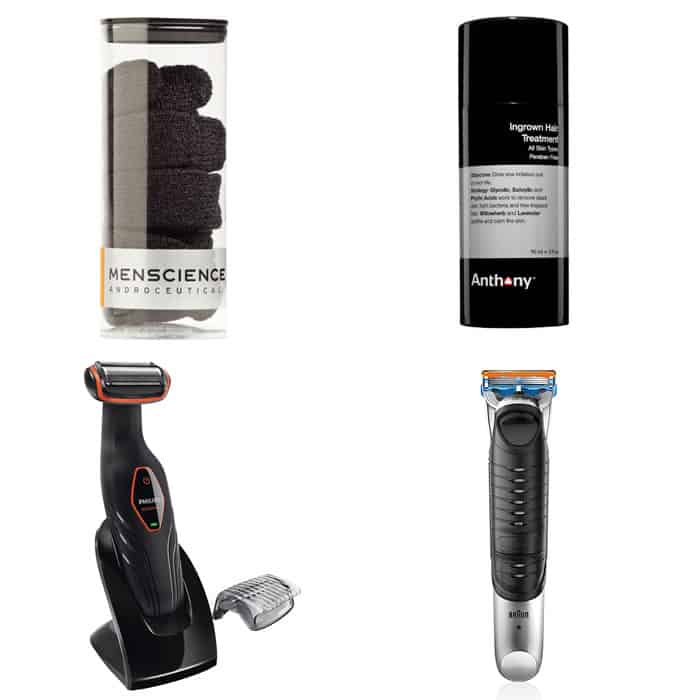
Thanks to advances in the technology, there are now several gadgets from the likes of Braun and Philips that offer the treatment at home. Which saves on regularly schlepping to a spa (as nice as that sounds).
This treatment is often expensive if you opt to have it done by a professional. It also stings slightly and can be time-consuming, because in order for the process to work, hair has to be in its growth cycle. This means it takes several separate treatments, over a period of months.
What’s more, for the laser to work properly, it requires pale skin and dark hair with plenty of melanin for the laser to hone in on. This means most laser-based apparatus won’t work on grey, red or blonde hair. Of course, there are exceptions to this rule, so it’s worth checking whether the specific clinic has the technology to deal with lighter hair first.


 07 September 2021
 FashionBeans Editors
We independently evaluate all recommended products and services. Any products or services put forward appear in no particular order. if you click on links we provide, we may receive compensation.
Whether you’re an avid lifter wanting to show off your hard-won pecs, a cyclist who wants to maintain a pair of aerodynamic pins, or you simply hate having hairy shoulders, chances are you’ll have dabbled in body hair removal at some point.
If you have, you’re not alone. In fact, according to a survey by Braun, 62 per cent of men now manscape regularly, with those that do saying it makes them feel cleaner, sexier and also enhances the appearance of their muscles.
What’s more, a third of blokes also reckon it makes them more popular with the opposite sex. The question is: do you wax, shave or laser? Undecided? Here are the pros and cons of some of the most popular body hair removal methods, along with a few tips to ensure you’re successful in getting the smoothest results possible.
The main advantage of waxing is its long-lasting results. Take to ripping the hairs out and you’ll be fuzz-free for up to six weeks. And since the hair is removed at the root, it’ll grow back with fine, rather than blunt, ends so it’s less likely to itch.
Though best performed by a professional, if feeling brave there are now plenty of options on the market that will allow you to wax from the (dis)comfort of your own home, too.
Familiar with the expression ‘no pain, no gain’? It may as well have been invented for waxing. There are worse pains (getting kicked in the balls or your football team being relegated, for example) but make no mistake: this is still equally eye-watering stuff.
The pain is fleeting, mind, and it is possible to get used to it after a while. Sort of.
The simplest of all the hair removal methods, all that’s needed is a razor, some shaving cream and a steady hand.
The reason shaving is one of the most popular choices is that it doesn’t require a great deal of skill. Essentially, if you can shave your chin, you can shave your chest, too.
The odd nick and cut aside (bear in mind you’ll have to navigate nipples), the biggest drawback of shaving is itchy regrowth and the risk of developing unsightly and painful ingrown hairs.
Because you’ll be slicing the hairs off at the surface of the skin, within days you’ll also be left with chest, stomach or shoulder stubble.
The beauty of depilatory or ‘hair removal’ creams like Veet For Men Hair Removal Cream, Nad’s For Men and Nair Men is that they’re so easy to use. Simply apply, leave for a few minutes and then wash off – along with the unwanted hair, which is weakened at root level by the chemicals in the cream and falls away.
They’re particularly useful for areas like the shoulders that can be hard to reach with a razor. They’re also good for chests, armpits and legs, too.
The results aren’t as long-lasting as with waxing (hair will be poking through before a week is out) and some men are sensitive to the chemicals in the cream, especially if they’re left on for too long.
As with many forms of hair removal, creams can also leave skin spotty sometimes, so correct aftercare is crucial.
Laser hair removal offers one of the longest-lasting solutions to unwanted hair. Though unfortunately, it cannot always be guaranteed the hairs will be gone for good.
This method works by zapping the cells that make the hair, and can be used to thin body hair as well as remove it. It’s especially good for the back, shoulders, neck or buttocks.
Thanks to advances in the technology, there are now several gadgets from the likes of Braun and Philips that offer the treatment at home. Which saves on regularly schlepping to a spa (as nice as that sounds).
This treatment is often expensive if you opt to have it done by a professional. It also stings slightly and can be time-consuming, because in order for the process to work, hair has to be in its growth cycle. This means it takes several separate treatments, over a period of months.
What’s more, for the laser to work properly, it requires pale skin and dark hair with plenty of melanin for the laser to hone in on. This means most laser-based apparatus won’t work on grey, red or blonde hair. Of course, there are exceptions to this rule, so it’s worth checking whether the specific clinic has the technology to deal with lighter hair first.


Get the latest Men's Style Advice, Evergreen Guides, Shopping Tips, and Exclusive Deals From Today's Top Brands.
We respect your privacy. We won't spam you.
Get the latest Men's Style Advice, Evergreen Guides, Shopping Tips, and Exclusive Deals From Today's Top Brands.
We respect your privacy. We won't spam you.
